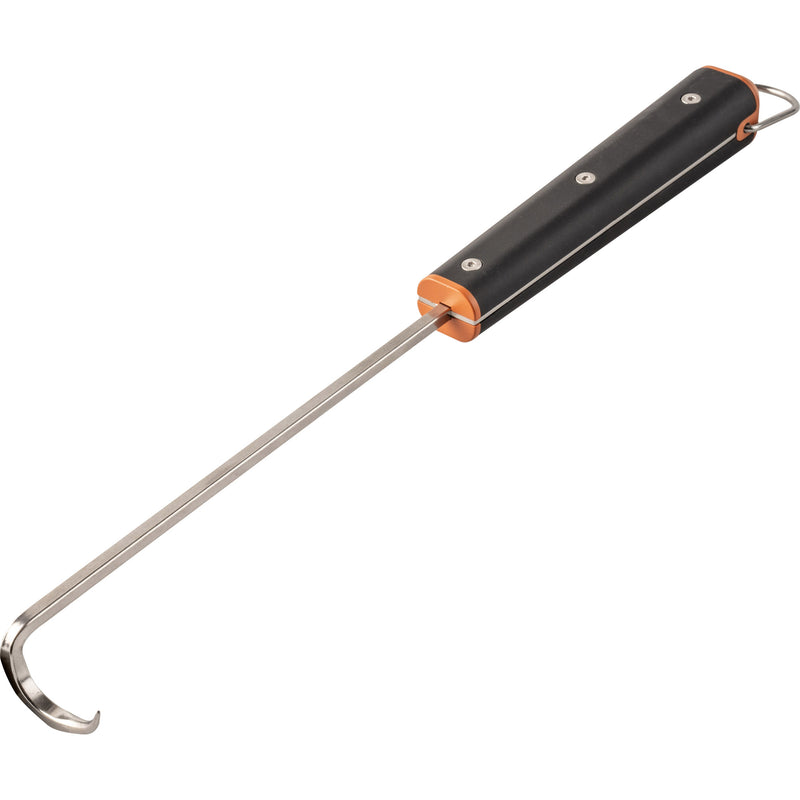
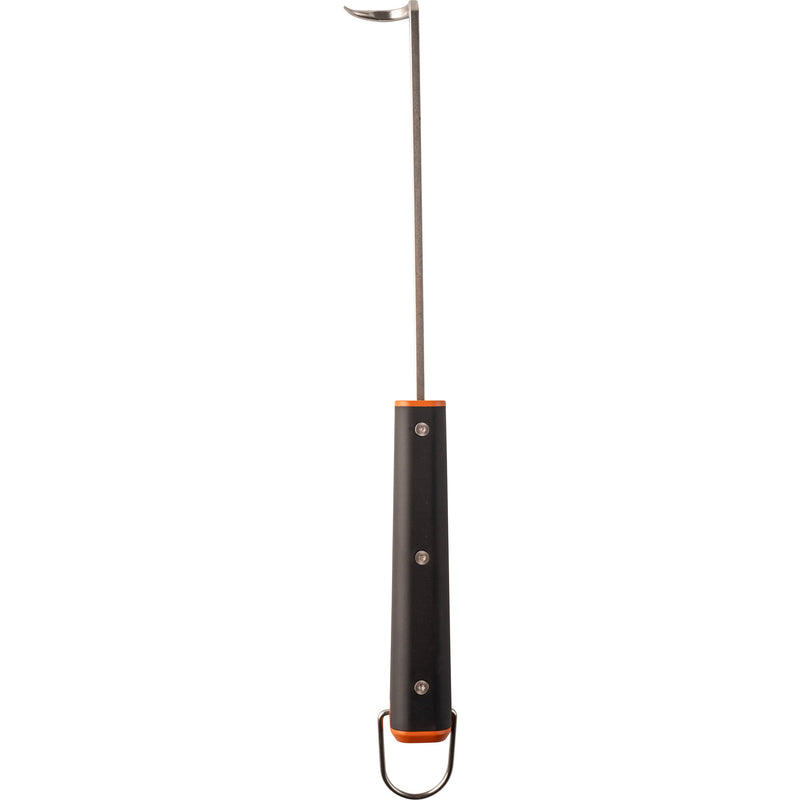
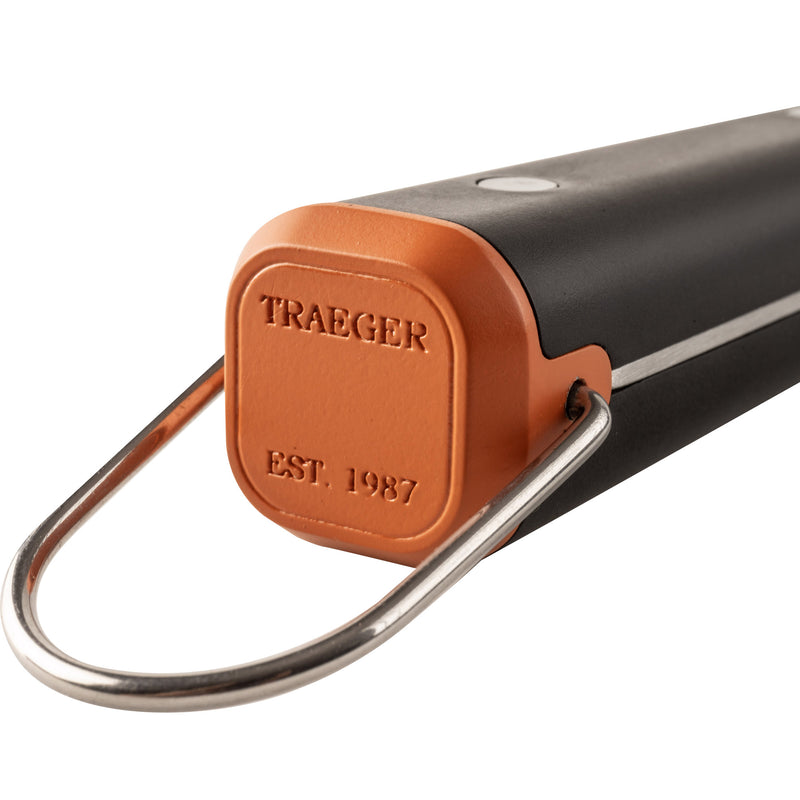
The Traeger BBQ Pigtail Meat Hook provides a specialized solution for hanging meats during smoking and low-and-slow cooking.This simple but ingenious tool opens up new cooking techniques that produce superior results for specific cuts and preparations.
Hanging meat during smoking—rather than laying it on grates—offers several advantages. Air circulates completely around the meat, ensuring even smoke penetration and uniform cooking on all surfaces. Rendered fat drips away freely rather than pooling underneath the meat, resulting in cleaner flavors and better bark formation. The hanging position allows more meat in a given smoker space, maximizing capacity during large cooks. Heat exposure is more uniform without one side pressed against a grate absorbing more heat than the other.
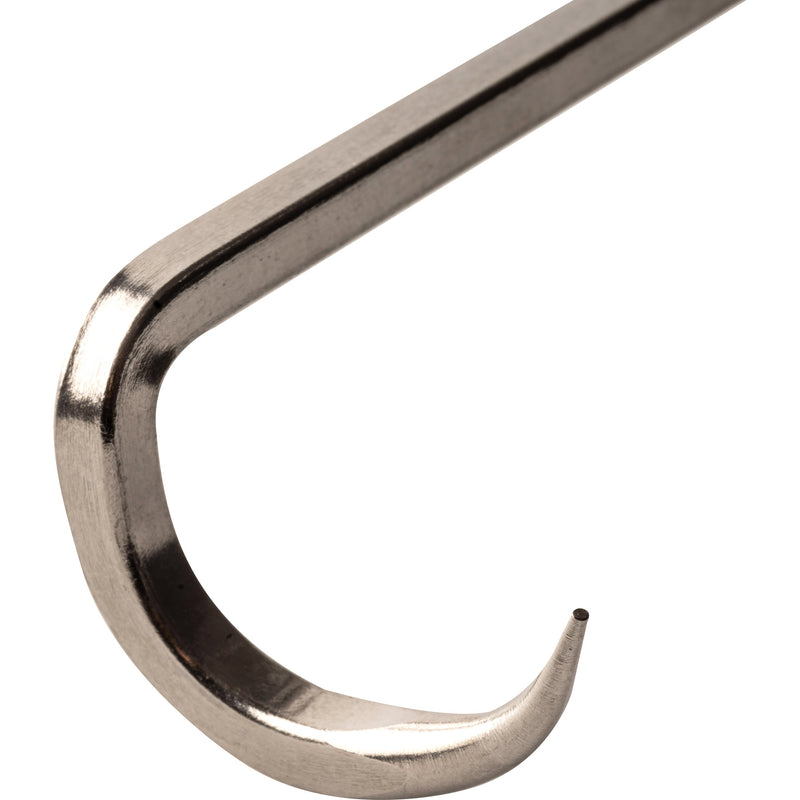
The pigtail design features a curved hook that penetrates meat and holds it securely during long cooks. The hook is inserted through the meat—typically through a natural cavity or a deliberate cut—then hung from a smoker rack, rod, or hook system. The curved shape prevents meat from sliding off during cooking even as it becomes tender and the connective tissue breaks down. This security is crucial during 8-12 hour smokes when checking and adjusting meat constantly isn't practical.
Common applications include hanging whole chickens by inserting the hook through the cavity and suspending them vertically for perfectly crispy skin and even cooking, hanging ribs individually for maximum smoke exposure, suspending sausages and charcuterie during smoking and curing, hanging pork belly for bacon production, or positioning brisket points and other irregular cuts for optimal smoke and heat exposure.
The heavy-duty construction withstands the weight of large cuts and the heat of extended smoking sessions. Cheap hooks bend under load or corrode from moisture and smoke, failing when you need them most. This Traeger pigtail is built to handle real-world smoking conditions—high heat, caustic smoke, heavy loads, and repeated use without deterioration.
Using the pigtail requires a smoker with hanging capability—either dedicated hanging racks, a rod system designed for this purpose, or improvised hanging points that can support weight. Many vertical smokers accommodate hanging naturally, while horizontal smokers may require accessories or modifications. Check your smoker's capabilities before purchasing if you're specifically buying this for hanging applications.
Beyond smoking, the pigtail works for dry-aging meat in refrigerators or cold storage where you want air circulation around the meat. The hook allows vertical hanging that maximizes air exposure while the durable construction won't rust or contaminate meat during extended aging periods. Some cooks also use pigtails for organizing tools—hanging utensils, thermometer probes, or accessories near the smoker where they're readily accessible.
Clean the pigtail after each use to remove grease and smoke residue. Hot soapy water or dishwasher cleaning works well. Dry thoroughly before storage to prevent rust, especially if your pigtail is carbon steel rather than stainless. Store hanging or in a drawer where the curved hook won't catch or damage other items.
For Edmonton pitmasters exploring advanced smoking techniques, the pigtail opens up new possibilities. Hanging chickens, ribs, and sausages produces results that are difficult or impossible to achieve with conventional grate cooking. The investment is minimal while the capability expansion is significant for serious BBQ enthusiasts.
KEY FEATURES:
- Curved hook design holds meat securely
- Heavy-duty construction for large cuts
- Allows hanging during smoking
- Provides even smoke and heat exposure
- Maximizes smoker capacity
- Works with chickens, ribs, sausages, more
- Durable through long cooks
- Essential for advanced smoking techniques